Do You Need a Permit to Repipe a House?
Yes, you need a permit to repipe a house in Baldwin Park CA. Here is what the permit costs in 2026, what the inspection covers, and who pulls it for you.
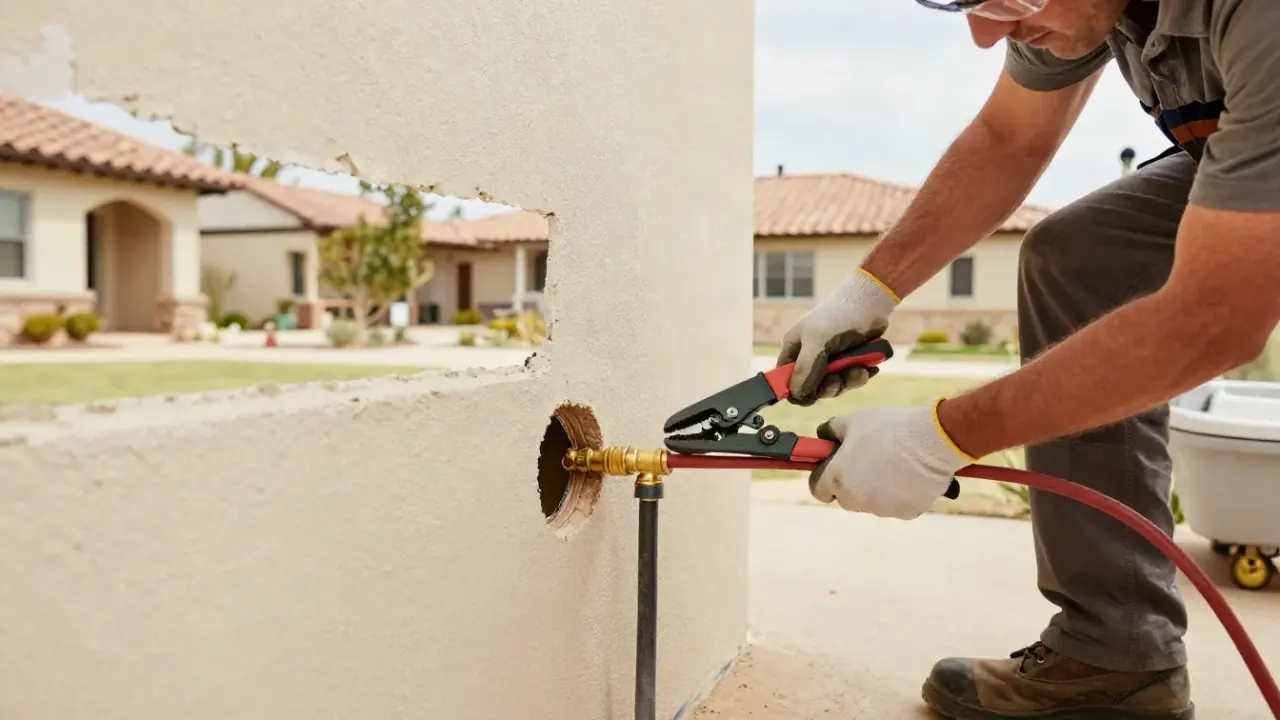
Yes, you need a permit to repipe a house in Baldwin Park, California. The City of Baldwin Park requires a plumbing permit for any repipe that alters, replaces, or extends the potable water distribution system inside your walls, under your slab, or between the meter and the house. A permit is not paperwork for its own sake - it triggers the inspection that proves your new lines hold pressure and meet the California Plumbing Code.
We have pulled hundreds of these permits for homeowners across the San Gabriel Valley, and the process is more predictable than most people expect. Below we cover what the permit costs in 2026, who pulls it, what the inspector looks at, and what happens if you skip it. If you are comparing options for Repiping Baldwin Park CA, the permit question is usually the first thing we settle before anyone picks up a wrench.
The short answer: yes, you need a permit
A repiping permit in Baldwin Park is a plumbing permit issued by the city's Building and Safety Division that authorizes you to replace water supply lines and requires a rough-in inspection before the walls close. It applies whether you are swapping galvanized steel for PEX, replacing polybutylene, or running new copper through a 1950s ranch house.
The permit covers the work, not the worker. Even a licensed plumber cannot legally repipe your home without pulling one. The only common exception is a small, like-for-like repair - say, cutting out 18 inches of corroded pipe and coupling in a new section - which most jurisdictions treat as a repair rather than a repipe. Once you are replacing whole runs or the majority of the system, you are in permit territory.
Here is the practical line we use: if the work touches more than one fixture group, or if any new pipe goes inside a wall or under a slab, pull the permit. It costs a few hundred dollars and it protects the resale value of your home.
Why Baldwin Park requires a repiping permit
Baldwin Park requires a repiping permit because water supply lines are a health-and-safety system, and the city has no other way to verify that the pipe in your walls is actually rated for potable water and properly supported. The inspection is the check.
This matters more here than in newer cities. A large share of Baldwin Park's housing stock was built between 1945 and 1975, which means galvanized steel and polybutylene are still common in the walls. Galvanized pipe rusts from the inside out and starts pinching off flow after 40 to 50 years. Polybutylene was pulled from the market in the mid-1990s after class-action claims tied it to sudden failures at the fittings.
When we do Galvanized Pipe Replacement Baldwin Park CA work, the inspector is looking for two things: that the new pipe is a listed potable-water material, and that it is supported and protected the way the code requires. Neither is optional, and neither is something a homeowner can self-certify.
There is also a resale angle. Baldwin Park sits in a market where buyers and their agents routinely request permit history. An unpermitted repipe shows up as a gap in the record, and it can stall a sale or force a price concession at the worst possible moment.
How much does a repiping permit cost in Baldwin Park CA?
Typical 2026 pricing for a residential repiping permit in Baldwin Park runs $250 to $550 for a single-family home, depending on fixture count and whether the water service line is included. That is the permit fee itself - separate from labor and materials.
What moves the number:
- Fixture count. A 1-bath starter home sits at the low end. A 3-bath house with a kitchen, laundry, and hose bibs sits at the high end.
- Water service line. If the repipe extends from the meter to the house, expect a separate or higher fee. That is a different permit scope than interior piping.
- Inspection count. Most repipes need one rough-in inspection. If the inspector flags something and you need a re-inspection, some jurisdictions charge a small re-inspection fee.
- Plan review. Simple single-family repipes usually do not require plan review. Larger or multi-unit projects sometimes do.
For context, the permit is roughly 5 to 10 percent of a full repipe project. A whole-house repipe in this area generally lands between $4,500 and $12,000 depending on size, material, and access. The permit is the cheap part. Skipping it is the expensive part.
If you want the fee and the inspection handled end to end, our Permit and Inspection Coordination Baldwin Park CA service covers filing, scheduling, and meeting the inspector on site.
Who pulls the permit for repiping in Baldwin Park?
The licensed plumbing contractor doing the work pulls the permit in Baldwin Park. The permit is issued to the contractor, not the homeowner, and the contractor's name stays on the record through the final inspection.
This is the arrangement you want. When the contractor pulls the permit, they own the inspection outcome. If the inspector wants a fitting redone or a support added, it is on them to fix it and get it signed off. When a homeowner pulls the permit as an owner-builder, that responsibility lands on the homeowner - including any re-inspection fees and any delays.
One more thing worth knowing: the permit has to be posted or available on site during the work. Inspectors in Baldwin Park will ask to see it. If your contractor cannot produce a permit number, that is a red flag, and it is worth pausing the job to sort out before the drywall goes back up.
What the repiping inspection actually checks
The repiping inspection in Baldwin Park is a rough-in inspection, which means it happens after the new pipe is installed and pressure-tested but before the walls are patched. Once drywall covers the work, the inspector cannot see it, and the sign-off becomes far harder to get.
What the inspector looks for:
- Pressure test. The system is filled and held under pressure - commonly 100 psi for a set period - to confirm there are no leaks at any joint or fitting.
- Material listing. PEX, copper, and CPVC all need to be listed for potable water. Unlisted or mismatched fittings get flagged.
- Support and protection. Pipe has to be strapped at the required intervals and protected where it passes through framing.
- Correct transitions. Where new pipe meets old, or where PEX meets copper, the transition fittings have to be the right type for the materials involved.
- Shutoff and access. Main shutoff and any required access panels need to be reachable.
We schedule the inspection as soon as the pressure test holds. In most Baldwin Park repipes, the inspector is on site within a few business days, and the walk-through takes 20 to 40 minutes. If it passes, you get the sign-off and we patch the walls. If it does not, we fix the flagged item and re-test - which is exactly why we do not close up walls early.
What happens if you repipe without a permit in Baldwin Park
If you repipe without a permit in Baldwin Park, the city can require you to open the walls and expose the work for inspection after the fact - which means paying twice for the same drywall. That is the realistic worst case, and it happens more often than people think.
The chain usually starts at resale. A buyer's inspector notes new-looking pipe with no permit on record. The buyer's agent asks for documentation. There is none. Now you are either retroactively permitting a finished repipe - expensive and disruptive - or negotiating a credit against the sale price.
There are other consequences worth naming:
- Insurance. If an unpermitted repipe later leaks and causes water damage, the carrier can question the claim.
- Code compliance. The city can issue a correction notice and require the work to be brought up to code, on your dime.
- Warranty gaps. A contractor who skipped the permit has no inspection record to stand behind their work.
None of this is hypothetical. We have been called into Baldwin Park homes where a previous owner's unpermitted repipe had to be partially torn out to get it signed off. The permit would have cost a few hundred dollars.
Common mistakes we see on repipe permits
The mistakes are consistent, and they are all avoidable. Here is what we run into most often on repipe permits in Baldwin Park.
Closing the walls too early. This is the big one. If drywall goes up before the rough-in inspection, you are either cutting it back open or hoping nobody notices. We never patch until the sign-off is in hand.
Assuming a repair does not need a permit. A two-foot patch is a repair. Replacing every supply line in the house is a repipe. Homeowners sometimes describe a full repipe as a repair to avoid the fee, and it does not hold up.
Mismatched materials at transitions. Connecting PEX directly to certain older metals without the correct transition fitting is a common inspection failure. It is a small part, but it fails the test.
No pressure test record. The inspector wants to see that the system held pressure. If the contractor did not test, the inspection stalls.
Permit pulled by the wrong party. If the homeowner pulls it and the contractor walks, the homeowner owns the correction notice. Let the licensed contractor carry it.
We also see this pattern in the older neighborhoods. In Repiping in Downtown Baldwin Park, where a lot of the housing dates to the postwar boom, galvanized and polybutylene are still common, and those repipes almost always involve a material transition somewhere in the run.
When to call a professional
Call a licensed repiping contractor when the work involves more than a single isolated repair, when you are replacing polybutylene or galvanized pipe, or when you are not sure whether a permit is required. Those are the three situations where guessing gets expensive.
We handle the whole sequence: we assess the existing pipe, tell you which material makes sense for your house, pull the permit, do the work, meet the inspector, and coordinate the drywall patching afterward. You do not have to talk to the city at all.
If you are weighing materials, our team can walk you through PEX Repiping Baldwin Park CA versus copper for your specific layout - PEX is faster and handles the region's hard water well, while copper has a longer track record in older homes. Either way, the permit and inspection process is the same.
Frequently asked questions
Do you need a permit to repipe a house in Baldwin Park?
Yes. Baldwin Park requires a plumbing permit for any repipe that replaces or alters the water distribution system. The permit triggers a rough-in inspection before the walls are closed. Small like-for-like repairs are usually exempt, but a full or partial repipe is not.
How much does a repiping permit cost in Baldwin Park CA?
Expect $250 to $550 in 2026 for a typical single-family home, based on fixture count and whether the water service line is included. That is the city fee only. Labor and materials are separate. Re-inspection fees may apply if the first inspection fails.
What happens if you repipe without a permit in Baldwin Park?
The city can require you to expose the finished work for inspection, which means paying for drywall twice. It also creates problems at resale, can complicate an insurance claim, and may trigger a correction notice requiring the work to be brought up to code.
Who handles repiping permits in Baldwin Park?
The licensed plumbing contractor doing the work pulls the permit and stays on the record through final inspection. We file the application, pay the fee, schedule the inspection, and meet the inspector on site so you never have to deal with the city directly.
How long does the permit and inspection take?
Permit issuance is usually a few business days for a standard single-family repipe. The rough-in inspection is typically scheduled within a few business days of the pressure test holding, and the walk-through itself takes 20 to 40 minutes.
Get help with repiping in Baldwin Park
We pull the permit, pass the inspection, and leave you with a repipe that is documented and code-compliant. If you are ready to move forward, call us at (626) 254-4162 and we will tell you exactly what your project needs.